September 11, 2026
Stopping the "Rusting" Brain: How Targeting Ferroptosis Shields Neurons from Oxidative Decay
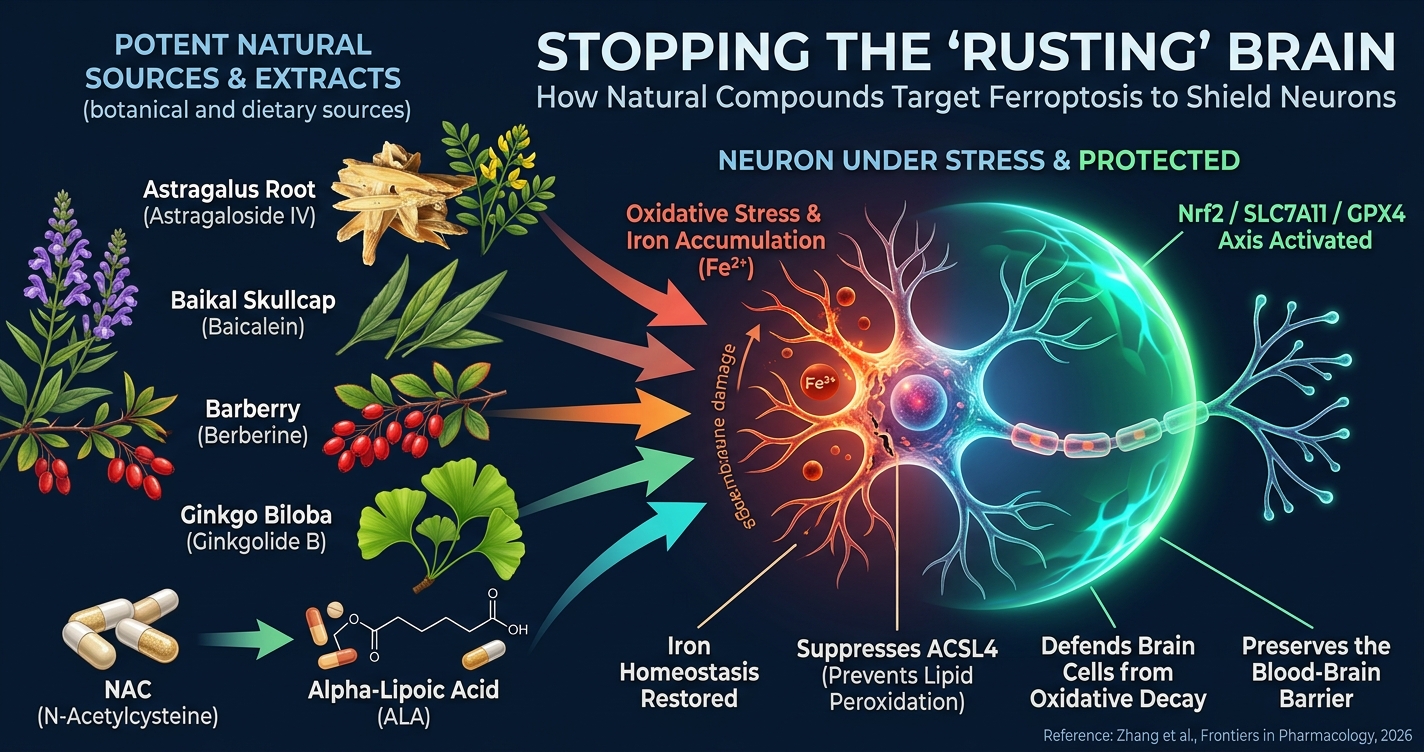
When neural tissue faces intense metabolic stress, poor perfusion, or severe systemic inflammation, brain cells don't just quietly fade out—they can undergo an aggressive, iron-driven form of destruction called ferroptosis. This lethal cascade occurs when labile iron accumulates and triggers uncontrollable lipid peroxidation, effectively causing the delicate fatty membranes of neurons to "rust". Modern pharmacological investigations into Traditional Chinese Medicine (TCM) compounds reveal a targeted strategy: interrupting this fatal iron-lipid reaction to preserve the blood-brain barrier and defend against cognitive decline.
The Mechanism: Disarming Iron-Induced Lipid Peroxidation Rather than providing non-specific antioxidant activity, TCM-derived neuroprotective compounds systematically dismantle the pathways that drive ferroptosis:
-
Activating the Master Defense Axis (Nrf2/SLC7A11/GPX4): Compounds like Astragaloside IV and Baicalein upregulate glutathione peroxidase 4 (GPX4)—the primary biological enzyme responsible for neutralizing toxic lipid hydroperoxides before they rupture the cell membrane.
-
Suppressing Membrane Degradation via ACSL4: Modulating acyl-CoA synthetase long-chain family member 4 (ACSL4) prevents the incorporation of vulnerable polyunsaturated fatty acids into membrane lipids, directly removing the fuel that sustains ferroptotic cascades.
-
Restoring Iron Homeostasis: Active botanicals stabilize cellular iron metabolism, preventing free, catalytic iron from generating destructive hydroxyl radicals via Fenton chemistry.
-
Reprogramming Microglial Polarization: These compounds shift resident brain immune cells away from neurotoxic pro-inflammatory states toward a reparative phenotype, dampening chronic neuroinflammation and stabilizing tight junctions across the blood-brain barrier.
Translational Considerations & Practical Boundaries Moving these promising botanical bioactives into human longevity and cognitive protocols requires navigating specific pharmacokinetic hurdles:
-
Bioavailability Challenges: Potent anti-ferroptotic agents such as Berberine face notoriously poor gastrointestinal absorption and rapid clearance. Enhancing systemic and blood-brain barrier delivery demands advanced delivery technologies, such as phytosome complexes or lipid-based encapsulation.
-
Safety & Pharmacological Interactions: High doses of Berberine can induce gastrointestinal cramping, while Ginkgolide B exerts antiplatelet activity. Co-administration with pharmaceutical anticoagulants or antiplatelet therapies requires careful clinical oversight to prevent bleeding risks.
Synergistic Formulations for Ferroptosis Defense To create an airtight defense against lipid peroxidation and metabolic stress, longevity researchers look toward compound stacking:
-
Glutathione Donors (N-Acetylcysteine / NAC): Supplies the direct rate-limiting cysteine precursor required to fuel the SLC7A11/GPX4 antioxidant system, compounding the protective actions of botanicals like Astragaloside IV.
-
Mitochondrial Antioxidants (Alpha-Lipoic Acid / ALA): Chelation-capable lipid and water-soluble antioxidants that cross the blood-brain barrier to reinforce Nrf2 signaling and recycle depleted cellular glutathione.
-
Vascular Perfusion & Aerobic Optimization: Pairing targeted phytocompounds (such as Ginkgolide B) with regular Zone 2 aerobic training to preserve cerebral microvascular flow, clear metabolic waste, and reduce local hypoxic triggers for iron release.
Reference Zhang X, Wang Y, et al., Progress of traditional Chinese medicine in targeting ferroptosis to combat cerebral ischemia-reperfusion injury. Frontiers in Pharmacology. 2026. doi: 10.1000/syn.42261256. Epub ahead of print. PMID: 42261256 (https://pubmed.ncbi.nlm.nih.gov/42261256/)