September 8, 2026
**Rewiring the Stressed Brain: The Neuroprotective Promise of Mucuna pruriens
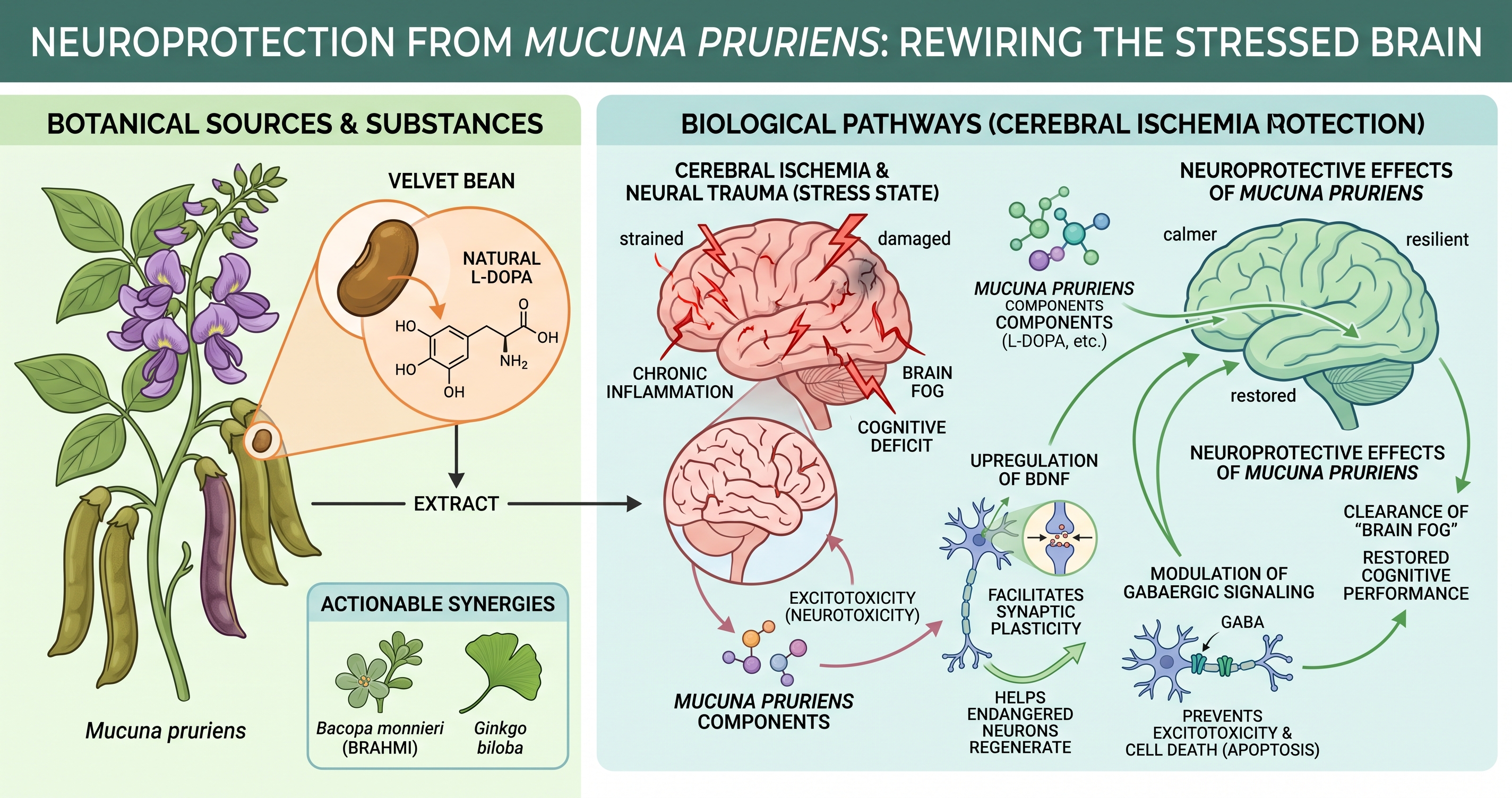
Cerebral ischemic stress and acute neural trauma starve brain cells of oxygen and fuel, setting off a cascade that leaves surviving networks clouded by chronic inflammation and severe cognitive deficit. Emerging preclinical evidence highlights Mucuna pruriens—a traditional botanical long studied for its natural dopaminergic content—as an unexpected shield against ischemic neural damage and post-injury cognitive decline.
The Mechanism: Trophic Support and Synaptic Calming Rather than merely functioning as a blunt stimulant, Mucuna pruriens acts on structural repair and inhibitory tone to stabilize compromised brain regions:
-
Upregulation of BDNF: The botanical significantly boosts Brain-Derived Neurotrophic Factor, facilitating synaptic plasticity and helping endangered neurons regenerate structural connections after metabolic interruption.
-
Modulation of GABAergic Signaling: By regulating GABA pathways, it restores balanced inhibitory neurotransmission, preventing the neurotoxic excitotoxicity that commonly drives cellular apoptosis during and after ischemic events.
-
Functional Recovery: In animal models of cerebral ischemia, these pathways translated directly to measurable clearance of "brain fog" and restored cognitive performance.
Translational Considerations & Human Realities While animal models used oral dosages around 50 mg/kg without exhibiting acute toxicity or severe adverse events, clinical application requires nuanced handling:
-
Dopaminergic Sensitivity: Because Mucuna pruriens naturally provides L-DOPA, human consumption requires calibrated titration to avoid receptor downregulation or peripheral conversion issues.
-
Safety Profile: The preclinical data showed favorable tolerability without high-toxicity signals, making standardized low-to-moderate doses an attractive target for cognitive longevity regimens.
Actionable Synergies for Cognitive Preservation Formulators and longevity researchers combine Mucuna pruriens with complementary neuroprotective compounds to sustain structural plasticity while managing metabolic stress:
-
Bacopa Monnieri: Supports dendritic branching and long-term memory formation, amplifying the neurotrophic environment driven by BDNF elevation.
-
Ginkgo Biloba: Enhances microvascular perfusion and oxygenation, addressing the vascular origins of ischemic vulnerability while Mucuna shields cellular architecture.
-
Targeted Recovery Protocols: Combining these nootropics with deliberate stress-reduction and sleep architecture optimization to curb cortisol-driven neural atrophy and reinforce synaptic resilience.
Reference Nayak VS, Pai KSR, et al., Neuroprotective potential of Mucuna pruriens in cerebral ischemia: Evidence from animal models and implications for translational neuropharmacology. Vet World. 2026 Apr;19(4):1691-1706. doi: 10.14202/vetworld.2026.1691-1706. PMID: 42245460. https://pmc.ncbi.nlm.nih.gov/articles/PMC13231339/