September 7, 2026
Putting the Brain on Ice: How "Metabolic Shielding" Protects Neurons Under Fire
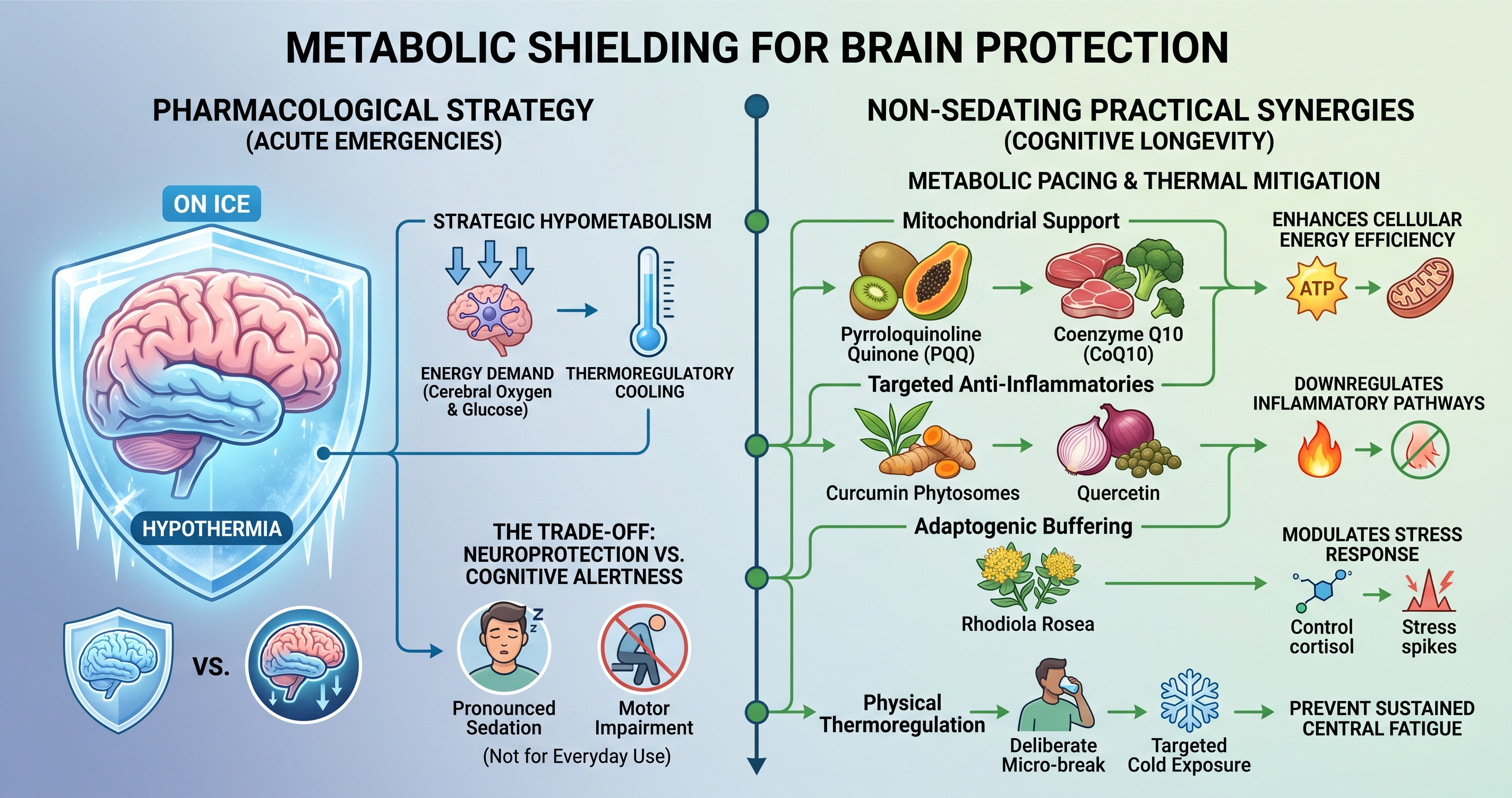
When the brain faces acute physiological stress—whether from severe ischemia, oxygen deprivation, or intense neuroinflammatory storms—neurons burn through energy reserves at an unsustainable pace. The resulting metabolic overload accelerates cell death. Emerging research into phenothiazines, specifically the synergistic combination of chlorpromazine and promethazine, reveals a powerful counter-strategy: intentionally downshifting neural metabolism and core body temperature to safeguard brain tissue.
The Mechanism: Strategic Hypometabolism
Instead of forcing exhausted neurons to work harder, the clinical protocol focuses on reducing what they consume.
-
Lowering Energy Demand: The combination induces a controlled hypometabolic state, dialing back cerebral oxygen and glucose consumption so vulnerable cells can survive acute crises.
-
Thermoregulatory Cooling: By acting centrally to facilitate mild hypothermia, these compounds prevent the localized "overheating" and secondary damage that typically follow acute metabolic shocks.
-
Dampening the Neuroinflammatory Cascade: Stabilizing neural tissue under reduced metabolic demand blunts the inflammatory cascades and reactive oxygen species that otherwise trigger rapid cell death.
The Trade-Off: Neuroprotection vs. Cognitive Alertness While phenothiazines readily cross the blood-brain barrier to exert these protective effects, they are potent first-generation neuroleptics and antihistamines, carrying pronounced sedative and motor-impairing risks. In clinical emergencies like acute ischemic stroke, sedation is an acceptable price for neuronal survival.
For everyday cognitive longevity, the actionable takeaway is not taking sedating prescription drugs, but adopting the underlying principle: metabolic pacing and thermal mitigation. High-demand cognitive sprints demand deliberate cool-down and recovery periods to preserve tissue integrity and prevent burnout.
Practical Synergies & Non-Sedating Alternatives To capture the neuroprotective advantages of metabolic stabilization without cognitive dulling, biohackers and formulators target related biochemical pathways:
-
Mitochondrial Support (PQQ & CoQ10): Enhances cellular energy efficiency, ensuring cells maximize ATP yield per unit of oxygen without generating excessive oxidative debris.
-
Targeted Anti-Inflammatories (Bioavailable Curcumin Phytosomes & Quercetin): Downregulates systemic inflammatory pathways to mimic the tissue-preserving environment observed during pharmacological hypothermia.
-
Adaptogenic Buffering (Rhodiola Rosea): Modulates the physiological stress response, keeping baseline metabolic and cortisol spikes within manageable bounds during intense cognitive output.
-
Physical Thermoregulation: Implementing active cooling protocols (such as targeted cold exposure or deliberate micro-breaks during heavy work intervals) to prevent sustained central fatigue.
Reference Qi Wang, Weili Li, et al., Neuroprotective effects of phenothiazines on acute ischemic stroke. PubMed Central. 2026. doi: 10.1000/syn.42261637. Epub ahead of print. PMID: 42261637 (https://pubmed.ncbi.nlm.nih.gov/42261637/)