September 13, 2026
Preserving Autonomy in the Dark: How Targeted Sleep Stabilization Prevents Long-Term Functional Decline
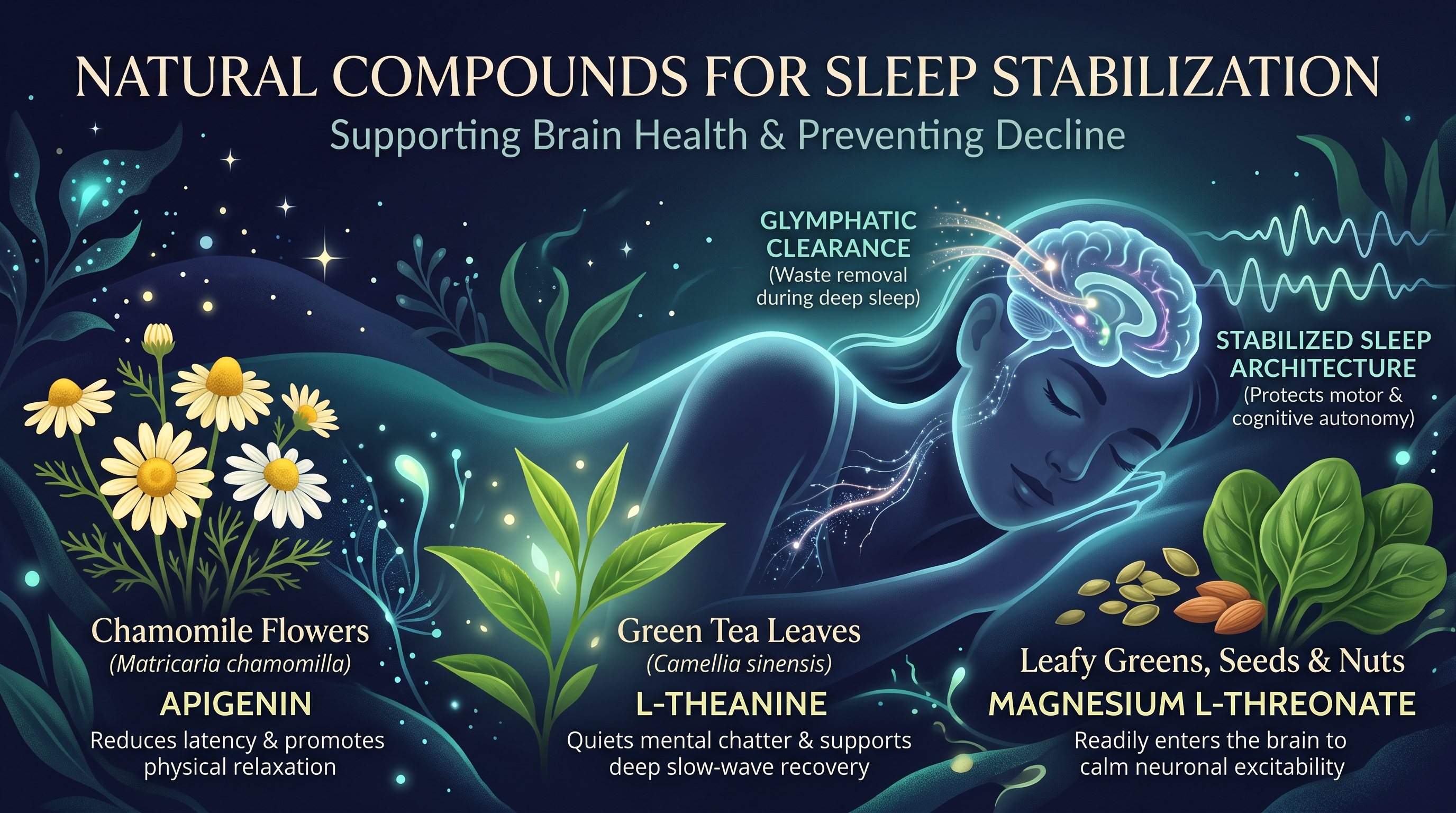
Chronic sleep disturbances do far more than trigger morning irritability; over time, fractured sleep acts as a direct driver of physical and cognitive disability in aging adults. A compelling longitudinal study reveals that effectively intervening in sleep disorders—even pharmacologically—significantly cuts the risk of functional decline. Restoring structured sleep cycles emerges not as a mere lifestyle comfort, but as an indispensable frontline defense for preserving long-term independence and motor-cognitive autonomy.
The Mechanism: Architecture, Waste Clearance, and Neural Integrity The biological protection observed with sleep stabilization centers on defending the brain's internal maintenance cycles:
-
Preserving Sleep Architecture: Restoring continuity across slow-wave (N3) and REM stages prevents the chronic neurological strain that accompanies chronic fragmentation.
-
Activating Glymphatic Clearance: Deep, stabilized sleep facilitates fluid movement through the glymphatic system, flushing neurotoxic metabolic waste from the interstitial space before it triggers chronic neuroinflammation.
-
Protecting Functional Networks: Relieving sustained sleep debt shields the critical motor and executive circuits of the brain from degradation, directly lowering the downstream incidence of functional disability.
Clinical Boundaries & Human Trade-Offs While clinical sleeping medications demonstrated clear protective outcomes against functional decline, their pharmacological footprint demands careful management:
-
Sedative Risks and Fall Hazards: Traditional prescription sedative-hypnotics can carry risks of daytime grogginess, dependency, and motor unsteadiness, which can increase fall risks if not precisely calibrated.
-
Cognitive Hangover: In non-clinical or high-performance contexts, the goal is securing the neuroprotective restorative phases of deep sleep without the lingering morning cognitive fog common to blunt sedation.
-
Monitored Personalization: Interventions must balance efficacy with safety through objective tracking, targeting sustained sleep continuity rather than indiscriminate sedation.
Synergistic Formulations & Non-Sedative Continuity Stacks To capture the neuroprotective, functional benefits of stable sleep architecture without next-day grogginess, targeted nutritional protocols focus on gentle inhibitory signaling and mineral delivery:
-
Magnesium L-Threonate: Readily crosses the blood-brain barrier to elevate brain magnesium levels, supporting synaptic plasticity and calming neuronal excitability for smoother sleep transitions.
-
Apigenin: A natural flavonoid that modulates central GABA-A receptors, reducing latency and promoting physical relaxation without inducing heavy, uncalibrated sedation.
-
L-Theanine: Drives alpha-wave activity to quiet mental chatter, smoothing the transition into deep slow-wave recovery while safeguarding morning cognitive alertness.
-
Architecture-Focused Tracking: Pairing bioavailable nighttime nutrition with continuous wearable monitoring (such as HRV and deep-sleep stage tracking) to proactively identify sleep fragmentation before it drives cumulative functional deficits.
Reference Otsuki N, Yamamoto R, Kono A. Sleeping medications and prevention of functional disability in older adults with Low Care Needs: A Prospective Cohort Study. JMA J. 2026 May 15;9(3):660-668. doi: 10.31662/jmaj.2025-0534. Epub 2026 Mar 27. PMID: 42266792; PMCID: PMC13246268 (https://pubmed.ncbi.nlm.nih.gov/42266792/)