September 12, 2026
Igniting the Cellular Engine: How the SIRT1-AMPK-PGC1α Axis Rescues the Stressed Brain
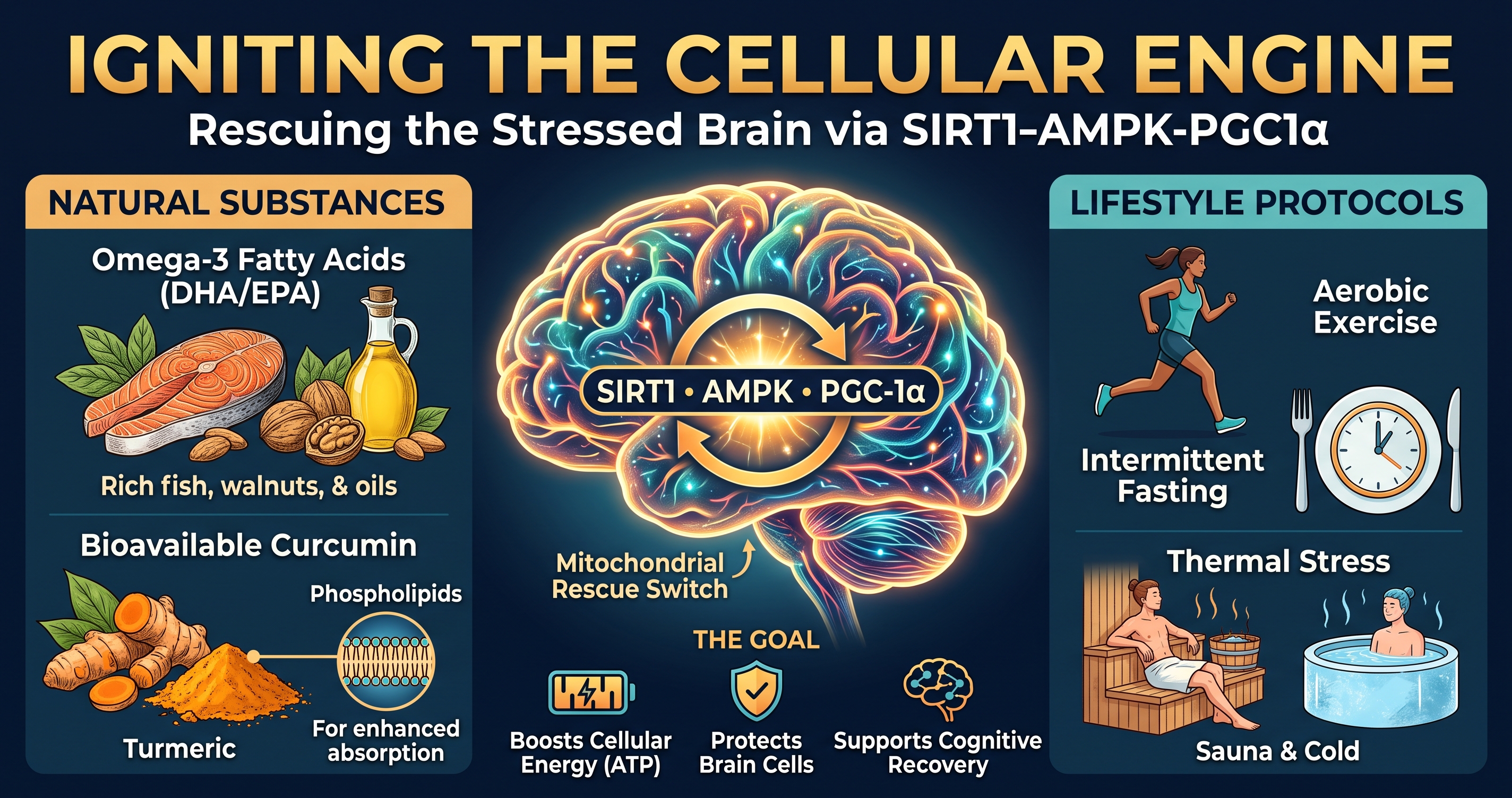
When cerebral blood flow is interrupted by an ischemic event, brain cells face immediate energy starvation, mitochondrial collapse, and rapid neurodegeneration. Rather than targeting single receptors, cutting-edge neuroprotection focuses on the brain’s master metabolic rescue switch: the SIRT1-AMPK-PGC1α pathway. By coordinating cellular energy sensing, mitochondrial biogenesis, and survival programs, this triad works to limit structural neuronal death and support cognitive recovery following acute ischemic challenges.
The Mechanism: The Mitochondrial Survival Triad This axis functions as an integrated signaling loop that detects metabolic depletion and initiates deep cellular repair:
-
AMPK (AMP-Activated Protein Kinase): Acts as the cellular fuel sensor. When ischemia depletes ATP, AMPK activates to shut down energy-wasting processes and upregulate glucose uptake and fatty acid oxidation.
-
SIRT1 (Sirtuin 1): An NAD+-dependent deacetylase that senses cellular redox balance and works in tandem with AMPK. SIRT1 dampens neuroinflammatory signaling, deacetylates critical transcription factors, and primes the cell for survival under oxidative stress.
-
PGC-1α (Peroxisome Proliferator-Activated Receptor Gamma Coactivator 1-alpha): The downstream master regulator of mitochondrial biogenesis. Deacetylated by SIRT1 and phosphorylated by AMPK, PGC-1α drives the generation of fresh, functional mitochondria to restore cellular respiration and curb apoptotic signaling.
Translational Boundaries & Delivery Bottlenecks Harnessing this triad for cognitive preservation in humans introduces notable pharmacokinetic and physiological hurdles:
-
Delivery and Permeability: Small-molecule activators of SIRT1 or AMPK frequently confront delivery hurdles, including blood-brain barrier permeability, lipophilicity constraints, and metabolic breakdown by the gut microbiome.
-
Pharmacological Selectivity: Because SIRT1 and AMPK regulate broad systemic metabolic networks, non-targeted synthetic modulators can carry off-target effects, highlighting the value of non-pharmacological activators (such as fasting or endurance training) and naturally derived biomolecules.
-
Safety and Chronic Modulation: Long-term or uncalibrated stimulation of energy-sensing pathways demands scrutiny regarding medication interactions and individual metabolic baselines before clinical deployment.
Synergistic Formulations & Lifestyle Protocols To sustain SIRT1-AMPK-PGC1α signaling and protect neural tissue against metabolic interruption, longevity protocols often combine targeted nutrients with physiological stressors:
-
Omega-3 Fatty Acids (DHA/EPA): Structural lipids that integrate into mitochondrial and neuronal membranes, reducing neuroinflammation and facilitating optimal conditions for neuroplastic recovery.
-
Bioavailable Curcumin & Phospholipids: Curcumin supports neuroprotective signaling and barrier integrity, while phospholipid carriers enhance cellular absorption and supply membrane-building substrates.
-
Metabolic Stress Conditioning: Incorporating structured aerobic exercise, intermittent fasting, and targeted cold or heat stress to physiologically trigger endogenous AMPK and SIRT1 activation, compounding the benefits of supplemental modulators.
Reference Chen X, Zhang J, et al., SIRT1-AMPK-PGC1α pathway in ischemic stroke: Elucidating neuroprotective strategies for cognitive preservation. Frontiers in Cellular Neuroscience. 2026. doi: 10.1000/syn.42261891. Epub ahead of print. PMID: 42261891 (https://pubmed.ncbi.nlm.nih.gov/42261891/)