August 31, 2026
Calming the Neural Storm: How Blood Pressure Pathways Could Shield Your Brain from Cognitive Fatigue
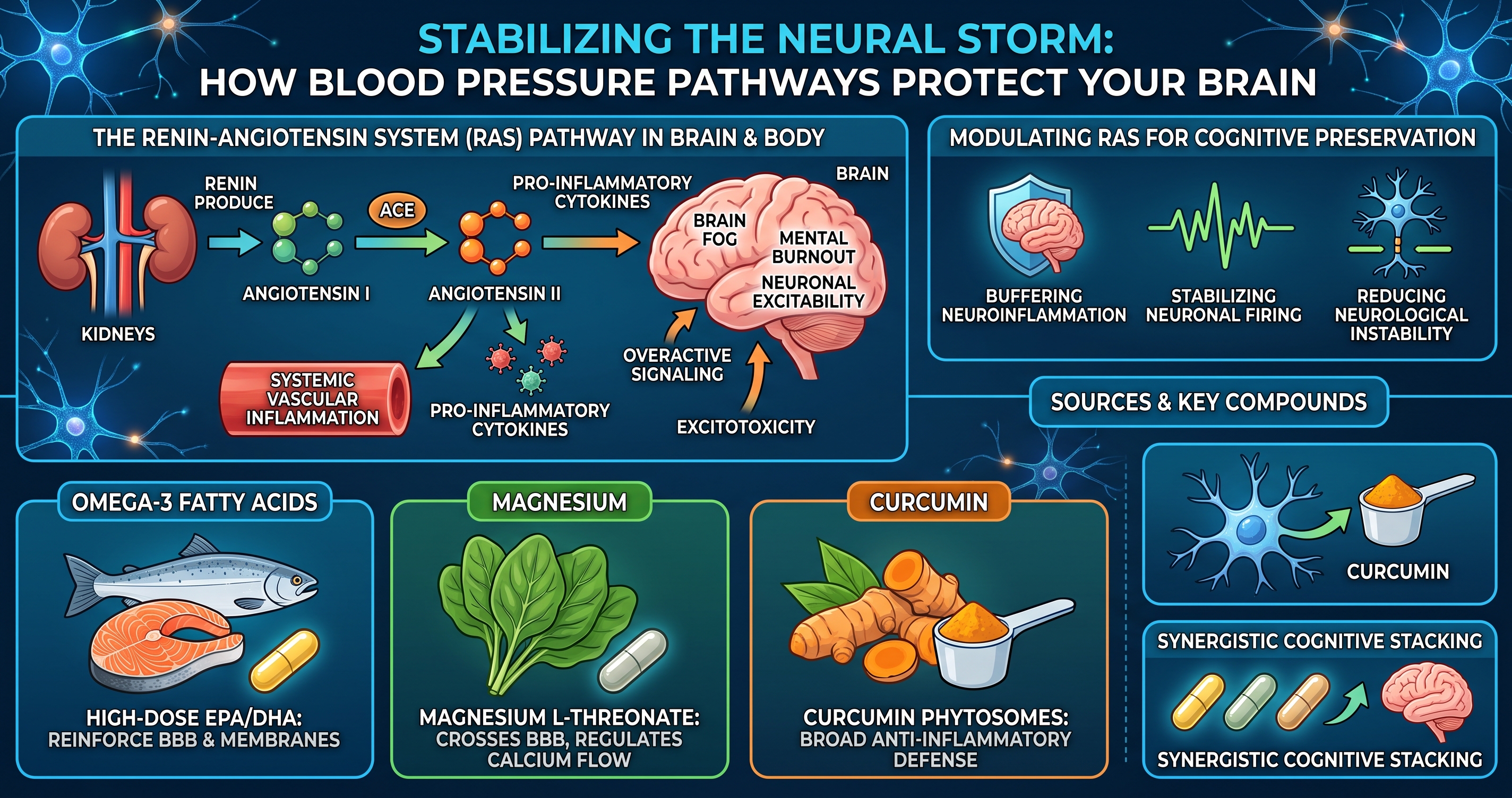
When building a nootropic protocol for sharper focus and sustained mental clarity, most routines prioritize stimulants or neurotransmitter precursors like caffeine and L-tyrosine. However, emerging research into neuro-inflammatory fatigue suggests that one of the most powerful ways to protect brain performance is by stabilizing the body's internal stress-hormone cascades.
A key mechanism drawing attention in cognitive preservation is the Renin-Angiotensin System (RAS)—a hormonal network best known for regulating blood pressure, but one that plays an equally pivotal role in neuroinflammation and neuronal excitability.
The Renin-Angiotensin System & Neural Excitability
The Renin-Angiotensin System controls systemic vascular tone and inflammatory signaling, primarily through the conversion of Angiotensin I to Angiotensin II. When this pathway becomes overactive due to chronic stress or vascular strain, it releases pro-inflammatory cytokines that penetrate central neural pathways, contributing directly to brain fog and mental burnout.
Clinical insights indicate that modulating this pathway offers significant neural benefits:
-
Buffering Neuroinflammation: Inhibiting the RAS cascade lowers the release of circulating pro-inflammatory cytokines, mitigating the systemic inflammatory load before it degrades cognitive stamina.
-
Stabilizing Neuronal Firing: Overactive neural signaling can push the brain toward excitotoxicity and rapid fatigue. Modulating the RAS pathway helps calibrate the threshold for neuronal firing, stabilizing neural circuits against overload.
-
Reducing Neurological Instability: In clinical observations, inhibiting the RAS pathway stabilized central neuronal excitability, resulting in a reduced need for heavy-duty medications used to manage acute neurological instability.
Navigating Bioavailability and Safety
Traditional pharmacologic modulation of the RAS pathway involves established therapeutic classes such as ACE inhibitors (e.g., Lisinopril) and Angiotensin Receptor Blockers (ARBs) (e.g., Losartan). While these oral compounds have high bioavailability, their primary neuroprotective advantage stems from their capacity to reduce systemic vascular inflammation before it crosses the blood-brain barrier.
Modulating blood pressure pathways requires careful boundary setting:
-
Blood Pressure & Electrolyte Balance: Lowering RAS activity carries inherent risks of hypotension (excessively low blood pressure) and hyperkalemia (elevated serum potassium levels).
-
Compound Interactions: These pathways can interact with routine pharmaceuticals, such as NSAIDs.
-
Calibration: Cognitive stabilization protocols must aim for steady-state equilibrium without driving blood pressure low enough to cause systemic lethargy or physical fatigue.
Synergistic Cognitive Stacking
To translate systemic anti-inflammatory protection into comprehensive cognitive preservation, RAS-modulating agents are often paired with targeted compounds that reinforce neural membranes and cross the blood-brain barrier directly:
-
High-Dose Omega-3 Fatty Acids (EPA/DHA): Reinforce blood-brain barrier structural integrity and optimize cell membrane fluidity.
-
Magnesium L-Threonate: Readily crosses the blood-brain barrier to regulate intracellular calcium flow and calm hyper-excitable neurons.
-
Curcumin Phytosomes: Deliver bioavailable polyphenol complexes for broad-spectrum systemic anti-inflammatory defense.
By combining systemic vascular-inflammatory buffers with barrier-crossing neuroprotective nutrients, modern cognitive wellness strategies can protect neurons from daily inflammatory wear and tear while sustaining high-level mental clarity.
Reference: Samuel S, Cadena-Tejada AJ, Peoples K, Torres LF, Smart SO. Association Between Renin-Angiotensin System Inhibitors and Antiseizure Medication Burden in Critically Ill Patients With Status Epilepticus. Ann Pharmacother. 2026 Jun 10:10600280261452558. doi: 10.1177/10600280261452558. Epub ahead of print. PMID: 42267526.