September 3, 2026
Brain Fog, Meet Bitter Leaf: How Green Extraction Is Unlocking Andrographis for Focus
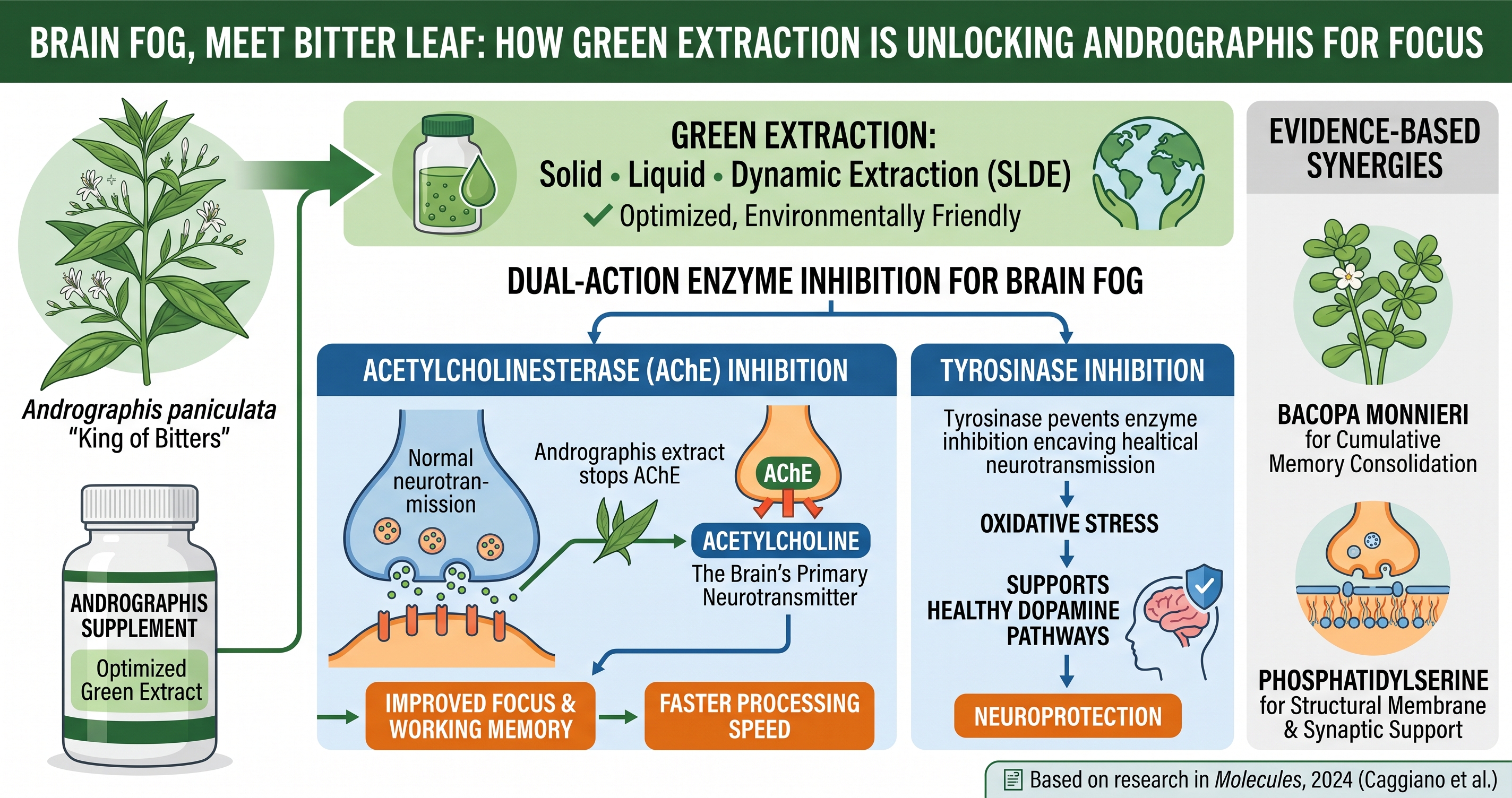
Andrographis paniculata—often known as "King of Bitters"—has long been staple herbal medicine, but modern green chemistry is giving it a serious cognitive upgrade. Recent metabolomics work shows that how we extract this plant completely changes its brain-boosting potency.
The Mechanism: Acetylcholine and Neuroprotection
Using Solid Liquid Dynamic Extraction (SLDE)—an optimized, environmentally friendly extraction technique—researchers yielded a phytochemical profile demonstrating dual-action enzyme inhibition:
-
Acetylcholinesterase (AChE) Inhibition: By slowing down the breakdown of acetylcholine, this extract helps preserve the brain's primary neurotransmitter responsible for processing speed, working memory, and sustained attention.
-
Tyrosinase Inhibition: While commonly associated with skin pigment, tyrosinase inhibition in neural tissue points toward protective mechanisms against oxidative stress and aberrant dopamine metabolite pathways.
Practical Takeaways & Constraints
-
In Vitro vs. In Vivo: The enzymatic inhibition signals clear nootropic promise, but optimal human oral dosing remains unstandardized.
-
The Absorption Barrier: Andrographolides face gut absorption and blood-brain barrier hurdles; look for lipid-based delivery or standardized diterpene content rather than raw powdered herb.
Evidence-Based Synergies
-
Bacopa Monnieri: Pairs well for cumulative memory consolidation, complementing the immediate cholinergic enzymatic support of Andrographis.
-
Phosphatidylserine: Provides structural membrane and synaptic support to compound ACh receptor efficiency under high cognitive workload.
Reference Caggiano C, De Falco B, Graziani G, et al. Metabolomics of Andrographis paniculata (Burm. f.) green extracts by an integrated LC-HRMS approach and in vitro biological activities. Molecules. 2024 Oct 16. doi: 10.3390/molecules29204904. PMID: 39459292 (https://pubmed.ncbi.nlm.nih.gov/39459292/)