September 2, 2026
# Black Pepper’s Hidden Superpower: Can Piperine Shield Your Brain From Neuro-Inflammation?
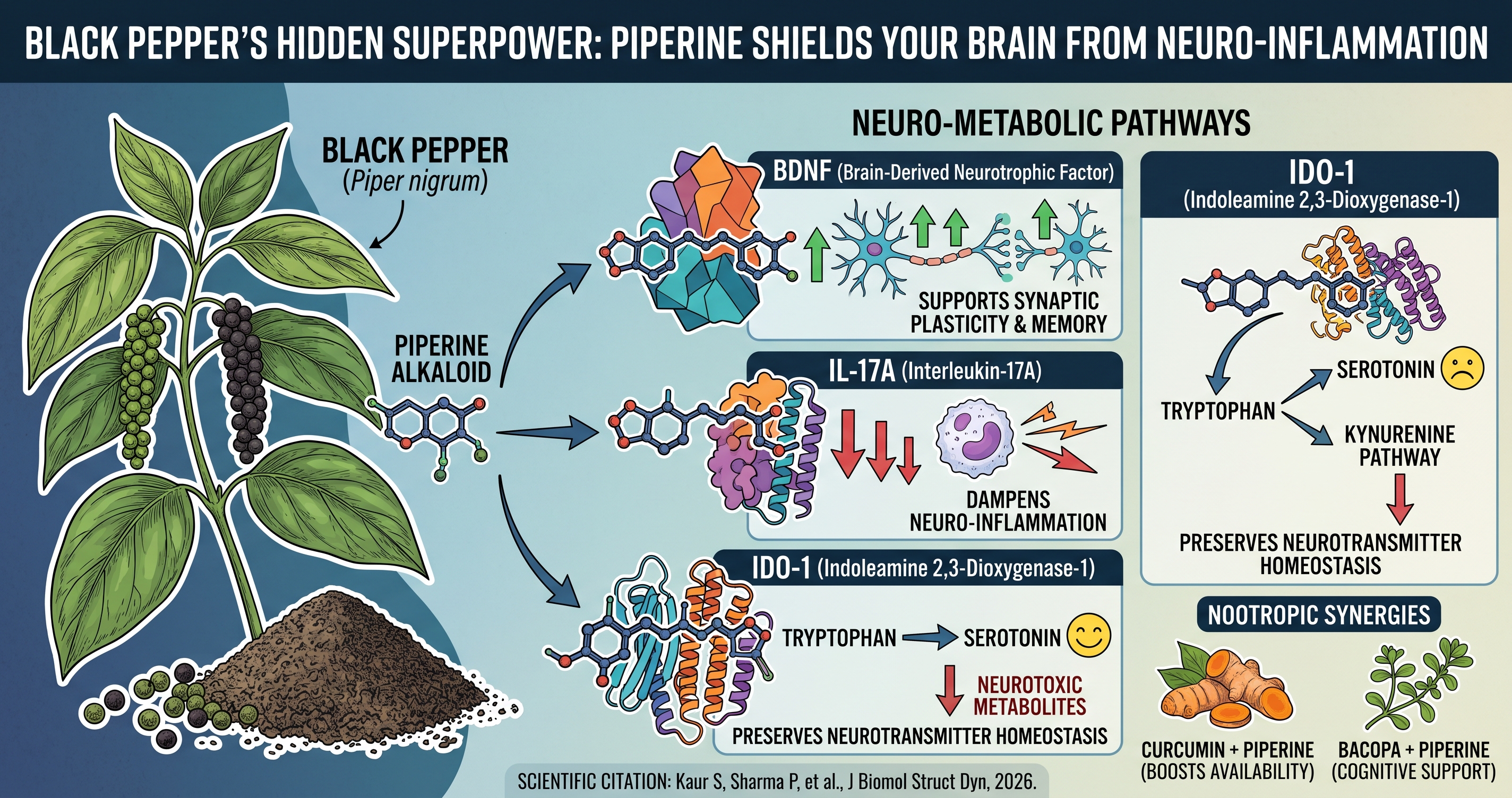
Piperine—the pungent alkaloid in everyday black pepper—is widely known in the supplement world as a bioavailability booster. However, recent computational drug discovery suggests piperine does far more than hitch rides with other nutrients: it directly engages molecular targets responsible for protecting your brain against inflammatory wear and tear.
When chronic stress and immune signaling collide, mental clarity suffers. Here is how piperine performs under the lens of molecular docking and structural biology.
The Molecular Breakdown
Computational modeling evaluating medicinal plant metabolites identified piperine as a high-affinity ligand interacting across three critical neuro-metabolic pathways:
-
BDNF (Brain-Derived Neurotrophic Factor): Piperine shows favorable binding profiles that support downstream neurotrophin signaling, a pathway vital for synaptic plasticity, memory formation, and neuron survival.
-
IL-17A (Interleukin-17A): By binding directly to this pro-inflammatory driver, piperine holds potential to dampen systemic inflammatory cascades before they breach central nervous system equilibrium.
-
IDO-1 (Indoleamine 2,3-Dioxygenase-1): IDO-1 activation diverts tryptophan away from serotonin production into the kynurenine pathway, generating neurotoxic metabolites that trigger mental fatigue. Piperine modulates IDO-1, helping preserve healthy neurotransmitter homeostasis.
Practical Application & Real-World Constraints
-
Computational vs. In Vivo Translation: This study relies on in silico molecular docking. While binding affinities point to strong therapeutic potential, biological efficacy depends on target engagement in live tissue.
-
Standardized Dosing: Raw black pepper contains variable alkaloid concentrations and can cause gastric irritation at therapeutic volumes. Clinical protocols typically use 5–10 mg of standardized piperine (≥95% purity) per serving to maintain predictable systemic exposure.
-
Pharmacokinetic Interactions: Piperine temporarily inhibits intestinal P-glycoprotein and hepatic cytochrome P450 enzymes (particularly CYP3A4). While this enhances absorption for co-ingested compounds, it can also significantly raise serum levels of prescription medications.
High-Impact Nootropic Synergies
-
Curcumin + Piperine: The classic gold standard. Curcumin provides systemic antioxidant and COX-2 inhibiting properties, while piperine raises curcumin's oral bioavailability by up to 2,000% while offering complementary neuro-inflammatory shielding.
-
Bacopa Monnieri + Piperine: Pairing a standardized bacoside extract with piperine supports cholinergic neurotransmission and memory consolidation while mitigating oxidative stress during extended periods of high cognitive demand.
Scientific Citation Kaur S, Sharma P, et al., Identification of potential compounds from medicinal plants using molecular docking and molecular dynamics simulation. Journal of Biomolecular Structure and Dynamics. 2026 May 15. doi: 10.1080/07391102.2026.2351284. Epub ahead of print. PMID: 42260785 (https://pubmed.ncbi.nlm.nih.gov/42260785/)